How does monthly SEO support my business?

Greg Swiszcz

In the ever-evolving digital melody, where websites compose the future’s ballad, the significance of Search Engine Optimization (SEO) can’t be overstated. It’s not a fleeting note but a continuous serenade that, when played consistently, orchestrates higher rankings, increased organic traffic, and sustained business growth. In this thorough guide, we’ll immerse ourselves in the multifaceted world of SEO and illuminate the myriad benefits that emerge from embracing a monthly SEO practice.


The SEO Overture: A Quick Reminder


SEO, the conductor of the digital orchestra, orchestrates the optimization of a website to elevate its visibility on search engines like Google. It involves an array of strategies and techniques aimed at fine-tuning a website’s relevance and authority, ultimately leading to higher rankings in search engine results pages (SERPs). The SEO stage is dynamic, influenced by algorithmic compositions, user behavior algorithms, and technological harmonies. To stay ahead in this digital sonnet, a continuous commitment to SEO practices is essential.


The Ongoing Benefits of Monthly SEO Practices


Sustained Visibility and Rankings:

The digital realm is a concert hall teeming with competitors vying for the spotlight. Monthly SEO practices ensure your website maintains its presence and rankings amidst the ever-changing composition. Regular optimization helps you dance with algorithmic updates and adapt to evolving user search melodies, preventing your site from fading into the background.


Fresh and Relevant Content:

Content is the soulful rhythm of SEO. Regularly updating and adding new content to your website signals to search engines that your site is an active participant in the symphony, deserving of attention. A blog section, akin to a dynamic movement, provides a platform for regularly publishing content that addresses user queries and establishes your authority in your industry. (hence why we update our blogs on a regular basis)


Improved User Experience:

User experience is the melodious note that resonates in SEO rankings. Regularly fine-tuning your website’s user interface, navigation, and overall experience creates a seamless composition. This not only pleases search engines but also ensures that visitors experience a harmonious journey on your site, leading to higher engagement and conversions.


Keyword Evolution and Adaptation:

Keywords are the lyrical poetry of SEO, and user search behavior evolves over time. Monthly SEO practices enable you to stay attuned to keyword trends, identifying new opportunities and adjusting your content to align with changing user intent. This ensures that your content remains a resonant melody, striking a chord with your target audience.


Strategic Link Building:

Backlinks, the harmonic echoes of SEO, are crucial for digital resonance. Monthly efforts in link building help you acquire high-quality, authoritative backlinks, enhancing your website’s credibility in the symphony of search engines. A strategic approach to link building forms a symphonic network, amplifying your online reputation.


Responsive Website Design:

With the crescendo of mobile device usage, having a responsive website is not just good practice; it’s a necessity for SEO harmony. Monthly SEO practices include ensuring that your website is an adaptable composition, providing a positive experience for users on various devices. This responsiveness is a key note in search engine algorithms.


Analytics and Performance Monitoring:

SEO is not a standalone melody. Regularly monitoring website analytics allows you to track the performance of your SEO composition. By analyzing metrics such as organic traffic, bounce rate, and conversion rates, you can identify the sweet spots in your symphony and fine-tune areas that need harmonious improvement.


The Monthly SEO Composition: Tips for Success


  1. Content Calendar Crescendo: Develop a content calendar that orchestrates the themes, keywords, and publication schedule for your content. This not only keeps your team in tune but also ensures a harmonious flow of fresh content that aligns with your SEO composition.
  2. Keyword Research Rhapsody: Embrace a monthly melody of keyword research. Identify new keyword harmonies, assess the performance of existing keywords, and adjust your content strategy accordingly. Tools like Google Keyword Planner and SEMrush can be instrumental in this symphony.
  3. Link Building Harmonies: Dedicate time each month to create symphonies through link building. Cultivate relationships with influencers and industry virtuosos, seek guest solo opportunities, and ensure that your backlink composition is a harmonious melody. Quality always trumps quantity in the symphony of link building.
  4. Technical SEO Concerto: Conduct regular technical SEO audits to identify and fix dissonant issues that might hinder your website’s performance. This includes optimizing site speed, fixing broken notes, and ensuring proper indexing of your pages by search engines.
  5. Social Media Sonata: Integrate your SEO symphony with your social media composition. Social signals, like likes, shares, and comments, can indirectly impact SEO resonance. Regularly share your content on social platforms, creating a harmonious resonance and driving traffic back to your website.
  6. Algorithmic Adaptation: Stay in tune with search engine algorithmic compositions. Search engines continuously refine their algorithms to deliver the most resonant results to users. By adapting your SEO composition to these updates, you ensure that your website remains in harmony with the latest ranking notes.
  7. Competitor Analysis Symphony: Keep an ear tuned to your competitors’ symphonies. Regularly analyze their SEO compositions, identify areas where you can add your unique notes, and seize opportunities to differentiate your brand in the digital harmony.


The Whole Picture


When we take a look at SEO campaigns, we take a look at everything mentioned above, along with everything else that’s both ON the website, as well as OFF the website:
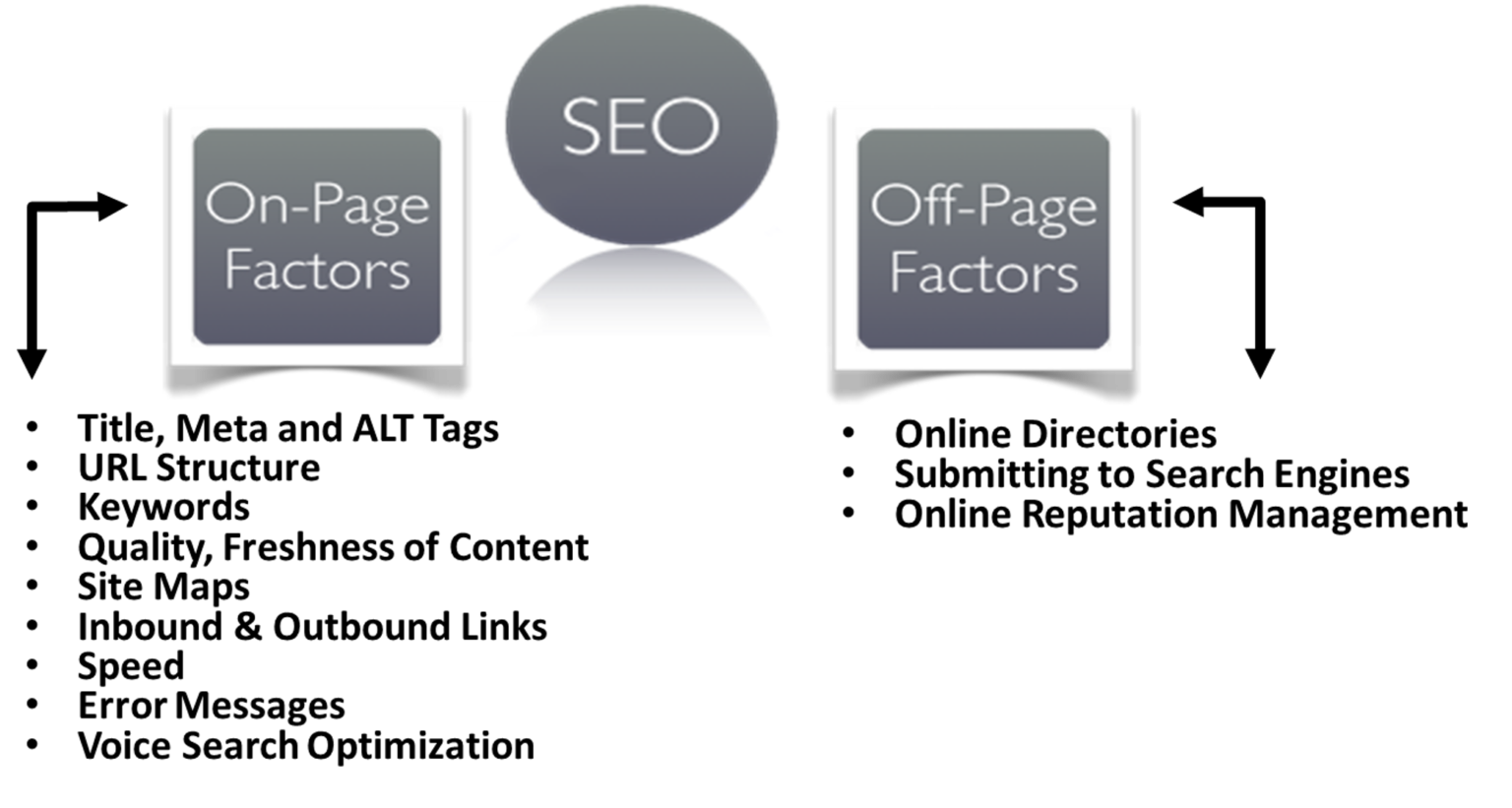
How SEO works graphic

In addition to SEO, we also recommend and implement Online Reputation Management.  Being able to monitor and improve all of the publicly held information about your business is vital. Being able to monitor that through an online portal, solicit reviews (which helps SEO), review competition, and see all kinds of mentions of your business will allow you to see how your customers are viewing you. Knowing this information allows you to adjust as you see fit.


Realizing the Symphony: A Case Study Crescendo

Case Study 1: B2B for HR/Employment


Background:

Our client was in need of gaining market share in the highly competitive recruiting industry, with their main competitor offering three Business to Customer products with price points between $20-$100. Our client, competing in the same industry but in the Business to Business space, had products worth thousands of dollars. Since both B2B and B2C companies were bidding on the same search terms to find their respective customers, AdWords was not a profitable endeavor.


Strategy:

We decided to focus solely on SEO to boost their listing organically. It included optimizing all keywords, meta descriptions, meta tags, alt tags, inbound link building, as well as optimizing ranking keyword reporting across Google, Yahoo, and Bing.


Results:

Our starting point was 321 organic visits. Within two months, the website traffic doubled to 696, and continued to triple the next month until hitting 10K visits less than a year later, then website topped at 14K monthly visits. In addition to website traffic, the company’s revenues have increased enormously since the implementation of SEO.
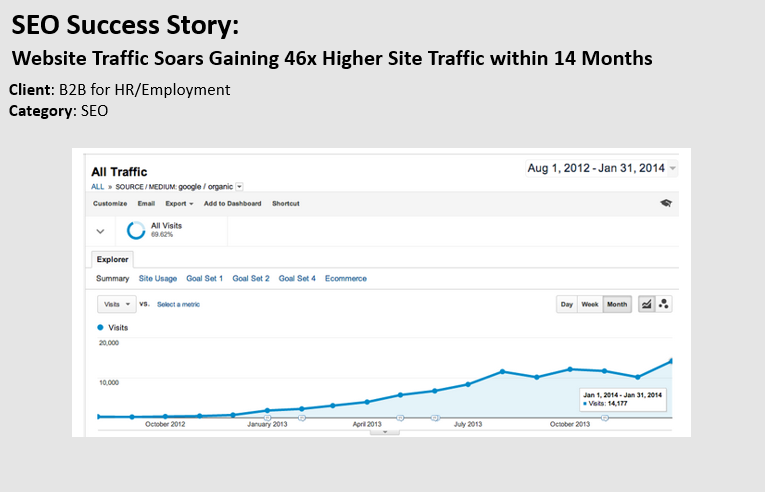
SEO Success  story

Case Study 2: Law Firm


Background:

The client wanted to focus on increasing the law firm’s search rankings, especially for people in need of a domestic violence or assault lawyer. The law firm also received a bad review on Google that was not from a former client and therefore needed to be disputed and resolved.


Strategy:

Our SEO team focused on improving the clients ranking in the Google Local search algorithm, and in the larger organic algorithm. The project began with an audit where we found several different parts of the site that were not optimized. Title tags on articles were sub par, which we went in and fixed. Also, looking beyond traditional SEO, our team found that the site design was increasing bounce rate and hurting conversions. Our team was able to make changes that improved the bounce rate and the SEO of the clients’ site. In addition to the SEO work, reputation management is included in SEO campaigns, so we were able to alert the client to some negative reviews. The client was then able to use the information to seek more positive reviews, which boosted overall reputation.


Results:

After the first month of the campaign organic and overall traffic gained 25% and 33% respectively, and 81% of traffic was new traffic. The next month organic and overall traffic jumped to 57% and 56% respectively. Year over year traffic went up 50%. The client reported an average of 250 site views per day. Other completed tasks include a listing on Yelp, changes to home page title tags, reducing the number of tags in the creation of blog posts, making points of conversion easier to locate on client’s site and updating broken Google Plus and Facebook links.
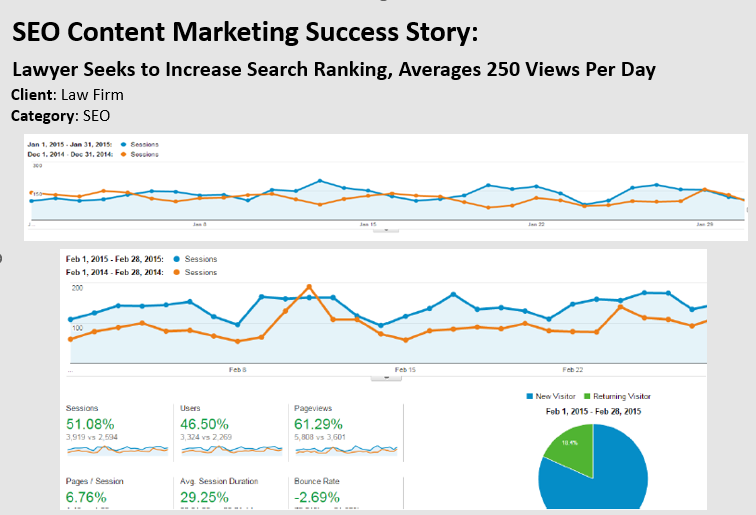
Law Firm Success Story

In the grand symphony of digital marketing, SEO plays a pivotal role, and the benefits of continuing SEO practices on a monthly basis are undeniable. It’s not just about reaching the top of the search results; it’s about staying there, adapting to change, and consistently providing a harmonious melody to your audience. As the digital landscape evolves, the symphony created by monthly SEO practices will resonate, ensuring that your brand remains not just visible but influential in the ever-expanding online realm. So, tune your website to the SEO symphony, and let the ongoing benefits unfold as your online presence crescendos to new heights.


Ready to learn more? Fill out the form below and our team will reach out for a free consultation:

Contact Us

By CCB Media Staff - May 12th, 2026 May 12, 2026
Your website may already be getting traffic — but are you converting visitors into conversations before they leave? Today’s consumers expect fast, convenient communication. If they have a question, they want answers immediately, not hours later through email or after sitting on hold. That’s why more businesses are turning to live chat and text-to-chat tools to engage prospects in real time and capture more leads directly from their websites. Live Chat Increases Conversion Rates Businesses that use live chat often see a significant boost in conversions. In fact, studies show that live chat can lead to a 40% increase in conversion rates . Why? Because timing matters. When a prospect lands on your website, they’re already showing interest. A live chat box gives them an easy, low-pressure way to ask questions, get information, and move forward without interrupting their browsing experience. Instead of leaving your site to “think about it,” they can get the answers they need immediately. Whether someone is comparing services, checking pricing, or deciding whether to contact your team, live chat helps remove friction from the buying process. Your Leads Don’t Stop After Business Hours One of the biggest advantages of live chat is that it works even when your office is closed. According to industry data, 59% of chat leads come in outside of normal business hours . That means many potential customers are researching and making decisions at night, on weekends, or during times your staff may not be available. Without a chat solution in place, those opportunities may be lost entirely. A live chat program allows your business to stay accessible 24/7, helping you capture leads whenever prospects are ready to engage — not just during office hours. Customers Prefer Live Chat Convenience drives customer behavior, and live chat has quickly become one of the preferred communication channels for consumers. Research shows that 73% of customers say live chat is the most convenient way to communicate . People want fast answers without making a phone call or waiting for an email response. Live chat offers a quick, familiar experience that feels easy and efficient — especially for mobile users who are already accustomed to texting and messaging apps. By adding live chat or text-to-chat to your website, you’re meeting customers where they are and communicating the way they prefer. Flexible Solutions for Every Business Not every business needs the same type of chat support, which is why flexible options matter. We offer both: · Virtual chat solutions that help automate engagement and qualify leads · Real human live chat programs staffed by trained agents who can interact directly with your website visitors Whether you want after-hours coverage, full-service lead engagement, or a hybrid approach, live chat can be customized to fit your business goals and customer experience strategy. Turn Website Traffic Into Conversations Your website should do more than provide information — it should actively generate opportunities. Live chat and text-to-chat tools help businesses engage prospects instantly, improve customer experience, and convert more visitors into qualified leads. With consumers expecting faster communication than ever before, businesses that respond quickly are often the ones that win the customer. If you’re looking for a simple way to increase engagement and capture more leads from your website, live chat may be one of the most effective tools you can add.  This story was generated using the AI model ChatGPT-5, with human editing for accuracy and tone.
By CCB Media Staff - April 27th, 2026 April 27, 2026
When clients compare the average 0.07% click-through rate (CTR) of impression-based advertising to the higher CTRs typically seen with Pay-Per-Click (PPC/AdWords), it’s natural to question which is more cost-effective. But digital advertising has evolved, and clicks alone are no longer the gold standard for campaign success. Here’s why impression-based buying often delivers better value, stronger targeting, and more measurable results—especially in today’s AI-influenced and search-shifting environment: It’s not just about the click anymore. With AI reshaping search behavior and click volume declining, impression-based ads focus on the full customer journey—not just one interaction. We track view-throughs and conversions, giving a more complete picture of how ads influence purchasing decisions. Conversion tracking > Click tracking. By installing container tags on a client’s website, we track actual actions taken—like form fills, calls, or purchases—which are much stronger indicators of intent than a simple click. 70% of conversions happen after an ad is seen—not clicked – [Comscore] 
By CCB Media Staff - April 15th, 2026 April 15, 2026
In today’s crowded marketing landscape, reaching the right audience matters more than ever. That’s where list targeting comes in—a strategy built on consent-based data and first-party insights that helps you connect with high-intent prospects in a more precise, measurable way. At its core, list targeting starts with data you already own or have permission to use. Think of your existing customer list: past buyers, leads that didn’t convert, or prospects who simply slipped through the cracks. Instead of letting those opportunities fade, you can re-engage them—and even go a step further by giving them an exclusive offer to increase urgency. It’s a powerful way to stay relevant and win back attention. Another highly effective approach is leveraging direct mail lists—but with a digital twist. Traditionally, businesses purchase lists based on specific geographic and demographic criteria such as income, home value, equity, recent moves, or lifestyle indicators. While direct mail reaches these individuals once, list targeting allows you to connect with them multiple times each month across digital channels. Even better, you can track their online behavior, giving you real insight into engagement and intent. If you’ve used direct mail in the past, there’s even more opportunity waiting. Those lists don’t have to sit idle—by repurposing them into an addressable digital strategy, you can bring them back to life and extend their value far beyond a single campaign. Beyond purchased and owned lists, your website is another goldmine for audience building. With Website ID technology, you can collect data on visitors over an initial period (typically around three months), then retarget those users later with tailored messaging. These are people who have already shown interest—making them some of your most valuable prospects. Seasonality also plays a key role, especially on Cape Cod that has so many second homeowners and vacation-driven traffic. With list targeting, you can reach these audiences before they even arrive—right at their primary residence—or continue engaging them while they’re in-market during peak seasons. This is especially impactful for businesses looking to connect with affluent customers at the right moment. Ultimately, list targeting isn’t about replacing your existing marketing—it’s about enhancing it. By layering in smarter audience strategies, you can capitalize on missed opportunities, improve campaign performance, and build stronger connections with the customers who matter most. Get started today with CCB Media to learn more about how to put your address lists to better use.
By CCB Media Staff - March 30th, 2026 March 30, 2026
Overview: A well-established building materials supplier wanted to increase brand visibility, engage professional audiences, and drive meaningful online and in-store actions—without relying solely on traditional advertising channels. The goal was to reach contractors, builders, and decision-makers across devices while maintaining efficiency and measurable performance. Digital Strategy: A full-funnel digital advertising approach was deployed, combining high-impact awareness tactics with performance-driven targeting. The campaign leveraged mobile, desktop, and streaming advertising by using advanced B2B behavioral targeting, AI, and retargeting with Social Mirror and CTV, Mobile Conquesting with Geo-Fencing and Geo-Retargeting relevant retail and competitor locations, and QR code-enabled Connected TV ads with Social Mirror to bridge TV exposure with mobile engagement. This multi-channel strategy ensured consistent brand exposure while capturing intent and engagement signals throughout the customer journey. Results: Due to the strong performance and sustained success of the initial campaign, the client has continued running campaigns for more than five years. Over that time, their efforts have generated more than 6,800 total conversions, including 5,400+ verified in-store visits and 2,300+ QR code scans, demonstrating consistent engagement and measurable results across multiple channels.
By CCB Media Staff - March 27, 2026 March 27, 2026
Stop settling for one-off handshakes and expensive paper ads. If you’re paying for a presence at a Home Show or Boat Show , you need a strategy that doesn’t expire when the doors close. Here is how to dominate your next event using Geo-Fencing and Geo-Framing: 1. Build a Digital Fence We "fence" high-traffic events—home shows, boat shows, or conventions. Every mobile phone that enters that zone is captured. While your competitors are handing out flyers, you’re quietly building a high-intent digital audience. 2. The 30-Day Retargeting Blitz The show doesn’t end when the booths come down. We retarget those attendees for 30 days after the event. By showing your ads 10–30 times on their mobile devices, you stay top-of-mind long after the initial handshake. · Pro Tip: Use a specific offer to push urgency and turn "just looking" into a closed sale. 3. Target the Neighborhood (Lookalikes) Since we know where these attendees live, we can target their neighbors . If someone is interested in a home remodel or a new boat, there’s a high statistical chance their neighbors are, too. This "Geo-Retargeting Lookalike" strategy expands your reach to the exact zip codes that matter. 4. Travel Back in Time with Geo-Framing Missed the big regional show last month? No problem. With Geo-Framing , we can pull past data from large-scale events to capture attendees who were there weeks ago. It’s the ultimate "second chance" for your sales team. The Bottom Line: Don’t just sponsor a booklet. Own the digital space and stay in front of qualified prospects before they buy and increase your chances to close the project.
By CCB Media Staff - March 4th, 2026 March 4, 2026
If you’ve noticed your blog traffic dipping lately, you aren’t alone. The traditional "how-to" blog post is losing its punch. Why? Because AI is already answering the question for your customers before they ever click your link. In a world of Generative AI, the old SEO playbook is being rewritten. We are moving from standard SEO into the era of GEO (Generative Engine Optimization). If you want your local business to stay visible in 2026 and beyond, here is exactly what you need to do right now. 1. Audit Your "AI Reputation" Before you change a single word on your website, do this: Open ChatGPT, Gemini, or Perplexity and search for your business. See what the AI says about your business. If it returns incorrect hours, an old address, or misses your key services, you have a data problem. AI models pull from across the web; if they are getting it wrong, it’s because your "digital footprint" is messy. · The Fix: Find the source of the bad info (Yelp, an old directory, or a social profile) and fix it immediately. Ensure your website and Google Business Profile (GBP) have the most current data. 2. Move Beyond "Generic" Content National brands are feeling the AI squeeze most, but local businesses aren't immune. To rank now, your content must be uniquely yours. · Stop writing: "5 Tips for Maintaining Your Roof." (AI can write that in 2 seconds). · Start writing: Case studies of local projects, deep-dives into how our specific climate affects materials, before/after customer stories or client testimonials. · The Rule: If an AI can't replicate the experience, it's worth publishing. 3. Feed the AI "Trust Signals" AI models and search engines are looking for "Proof of Life." They need to know your business is real, active, and trusted. · The "Everything" Strategy: Your website shouldn't just have text. It needs high-quality images, video tours, and a comprehensive "About Us" section. · Seek Awards: Industry awards and "Best of [City]" mentions are huge trust signals for AI. · Maximize Off-Site Profiles: Don't just fill out your Chamber of Commerce or Yellow Pages profile—over-optimize them. Use superlatives (e.g., "The #1 Rated Plumber in Hyannis") and fill out every single available field. 4. Diversify Your Reviews We know that 25% of local search rankings come from your Google Business Profile. While Google reviews are king, AI models look at the whole picture. · Get reviews on Yelp, Facebook, Angi, and industry-specific sites. · AI uses reviews as a primary data source. If customers mention specific services in their reviews ("They fixed my leaking faucet perfectly"), AI learns that you are an expert in that specific service. 5. Get "Hyper-Local" with Reddit and News  Google and ChatGPT currently have a "crush" on Reddit. It represents authentic human conversation—something AI can't fake. · Reddit Strategy: Look for your city’s subreddit (e.g., r/Austin or r/Chicago). Engage naturally. When someone asks for a local recommendation, being mentioned there provides massive SEO and GEO weight. · Local PR: Get mentioned in local news articles or press releases. These high-authority local mentions help AI engines "trust" your business location and authority. The Bottom Line SEO isn't dead; it’s just evolving. By focusing on GEO (Generative Engine Optimization)—feeding AI the right data, diversifying your reviews, and proving your local authority—you’ll stay ahead of the curve while your competitors are still wondering where their traffic went. This story was generated using the AI model ChatGPT-5, with human editing for accuracy and tone.
By CCB Media Staff - February 18, 2026 February 18, 2026
The New Rules of Search: How to Future-Proof Your Local SEO Right Now
By Greg Swiszcz - February 11th, 2026 February 11, 2026
Key takeaways: · Engagement matters before purchase - Attention and interaction are early buying signals. · Relevance beats reach - Personalization cuts through noise. · Confidence drives conversion - Address hesitation at the right moment. · Connected marketing wins - Unified experiences build loyalty. Remember when marketing was simple? You put up a billboard, punched a target demo into some platform, and hoped for the best. Yeah — those days are gone. Today, consumer behavior isn’t just shifting — it’s evolving in ways that make a lot of old playbooks feel downright obsolete. The 2026 Predictions: Consumer Trends Shaping the Marketing Landscape (link to: https://cdn.sanity.io/files/b7pblshe/marketing-prod/d4cac01cc22b6d545997b901f47d2966feba2e80.pdf ) report lays out four big patterns shaping how people engage with brands — and here’s the kicker: these trends aren’t squirreled away in some ivory-tower slide deck. They’re happening now — and the brands that adapt early will own the next wave of customer loyalty and growth. But understanding trends isn’t the same as reaching them. That’s where three modern tools come in: Social Mirror , Mobile Conquesting , and Website Visitor ID — and together they’re a marketer’s playbook for taking trends off the page and into reality. Let’s unpack how this all works — without the jargon and marketing buzzwords.
By CCB Media Staff January 22, 2026
Native Ads – When and Why to Use Them?
By Tracey Geary January 15, 2026
Key Takeaways: · Meta advertising continues to deliver strong ROI for the right brands because it combines unmatched scale, rich first‑party data, and machine‑learning optimization across the full funnel. · Facebook and Instagram are still heavily used by adults with purchasing power—especially parents, homeowners, and decision‑makers—and Meta remains one of the most effective platforms for driving awareness, engagement, and measurable action when paired with the right creative and strategy. You’ve heard it: “Meta doesn’t work anymore.” The reality is more nuanced. Meta still works exceptionally well—but not for everyone, and certainly not in the same way it did in 2018. The brands seeing consistent success on Meta today understand how the platform’s machine learning operates, what types of businesses it is built to serve, and which audiences continue to respond strongly across Meta’s ecosystem. Just as importantly, Meta is far more than “just Facebook.” Meta is the parent company of Facebook, Instagram, Messenger, WhatsApp, and Threads , rebranded to Meta in 2021 to reflect a broader focus on immersive digital experiences and the future of connection. When marketers dismiss Meta, they often overlook the scale, data depth, and intent signals that make it one of the most powerful advertising environments available.